Running a delivery fleet involves planning routes, supporting drivers, monitoring vehicles, organizing schedules, and keeping records. These tasks become harder when a business handles many daily stops across different areas. Ground Cloud io is a useful subject to understand because it represents how connected fleet technology can bring important delivery activities together. These systems help teams manage time, safety, and daily responsibilities.
What Is Cloud-Based Fleet Management?
Cloud-based fleet management uses internet-connected software to organize information about vehicles, drivers, routes, and operations. Instead of keeping records in separate files or relying only on phone calls, a company can use a shared digital system. Authorized staff can access current information through a web portal or mobile application.
The cloud model allows information to move between office teams and drivers. A manager can update a route while a driver receives the details on a mobile device. Central records also make previous activity easier to review.
Why Delivery Businesses Need Organized Systems
Last-mile delivery moves an order from a distribution point to its recipient. Drivers visit many addresses, face traffic, follow instructions, and work within time limits. A delay at one stop may affect the rest of the route.
Without organization, dispatchers spend time correcting route details, drivers may receive incomplete instructions, and managers may struggle to explain delays. A connected system gives the team a clearer view of planned work and helps everyone follow the same information.
Good organization supports customer service by helping drivers find the right entrance, follow instructions, and avoid mistakes.
Route Planning and Stop Sequencing
Route planning considers stop locations, road conditions, delivery windows, and each driver’s workload. Stop sequencing places destinations in a practical order so unnecessary travel can be reduced.
A digital routing tool can create a sequence and provide turn-by-turn directions. Stop notes can share entrance details, access instructions, or warnings.
In a system such as Ground Cloud io, routing information is useful when it is clear and current. Road closures, weather, customer changes, and traffic can make a planned route unsuitable, so teams need a way to communicate adjustments.
Supporting Drivers During the Workday
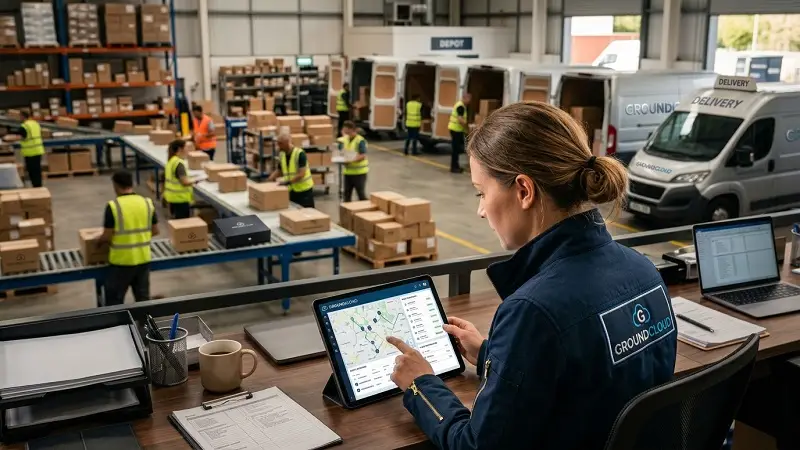
Drivers need accurate directions, realistic schedules, stop information, and a reliable way to report problems. Mobile applications can place these details in one location, reducing the need to switch between paper lists, messages, and navigation tools.
A driver may use a mobile device to review stops, follow directions, read notes, or update progress. Offline access can matter where mobile coverage is weak.
Managers should explain the system, provide training, and listen to feedback when an application is confusing or information is inaccurate.
Improving Road Safety
Safety is essential. Drivers face traffic, tight parking, weather, fatigue, distractions, and pressure to complete stops. A responsible operation sets clear expectations and gives workers practical guidance.
Some fleet platforms include driver safety programs, digital lessons, and video event data recorders. Camera systems may help identify harsh braking, distracted driving, or other risky behavior. These records can give managers a starting point for coaching, but they should be reviewed fairly and with context.
Safety technology is most useful when it supports learning. Managers can discuss patterns, recognize careful habits, and provide training. Vehicle checks, sensible schedules, seat belt use, and road rules remain essential.
Training and Compliance Records
Delivery companies must track training, qualifications, and operational records. Requirements vary by location, vehicle, employer, and contract. Managers should understand the rules that apply to their business instead of assuming one software setting covers every obligation.
Digital training can assign lessons, record completion, and identify workers who need support. Modules may cover defensive driving, parking, vehicle checks, or safe handling.
Ground Cloud io can be understood in the wider context of connecting training and compliance with daily fleet work. Still, a digital record is useful only when accurate and properly maintained. Businesses should check information regularly, limit access to authorized staff, and retain records according to applicable policies and laws.
Tracking Performance With Useful Data
Fleet managers may track route duration, missed stops, mileage, attendance, safety events, and planned versus actual performance. Reporting tools such as Ground Cloud io can organize these details into dashboards or summaries.
Data can identify repeated delays and show where training, schedule changes, or better stop information could help. However, numbers need context: roadworks and weather affect results.
Useful reviews combine data with conversation and real-world context. Managers should explain what is measured and how information will be used. Clear expectations help workers understand monitoring and reduce unfair comparisons.
Timekeeping, Scheduling, and Communication
A delivery operation depends on people arriving on time and having clear assignments. Scheduling tools can help managers organize shifts, assign routes, and review attendance. Timekeeping records may support payroll, although businesses must check that their system follows local employment requirements.
Communication is equally important. Drivers need to know when a route changes, a stop is reassigned, or a customer issue needs attention. Office staff need timely updates when a vehicle breaks down or a delivery cannot be completed. A shared platform can make these exchanges easier, provided staff know which channel to use and when a phone call is necessary.
Teams should agree how urgent problems are reported, who approves route changes, and how updates are recorded.
Data Protection and Responsible Use
Fleet systems can contain personal, business, vehicle, and location information. Companies should treat this data carefully. Access should be limited to people who need it, and accounts should use strong passwords and suitable security settings. Staff should know what information is collected and why.
Managers should review privacy rules before introducing cameras, location tracking, or driver monitoring. They should explain the purpose of these tools, how records are stored, who can view them, and how long information is kept. Applicable laws and employment agreements may set additional requirements.
Businesses should plan for outages with backup procedures, support contacts, and clear manual steps.
Choosing and Using Fleet Software
Before selecting a platform such as Ground Cloud io, a business should list its main problems. One company may need better route planning, while another may need training records or clearer reports. A long feature list does not automatically mean a system is suitable.
Managers should consider ease of use, device compatibility, training, support, security, reporting, and cost. Test common tasks and clarify contract terms, integrations, and data export options. A practical review should include the people who will use the tools each day. Their feedback can reveal confusing screens, missing information, or steps that slow work down before a full launch begins. Before wider adoption begins.
A gradual introduction can work better than changing everything at once. Start with a small group, collect feedback, correct problems, and expand.
Common Challenges and Practical Solutions
New technology can bring challenges. Drivers may resist an unfamiliar application, managers may enter incomplete information, or teams may expect automatic tools to solve every problem. These issues are easier to address when expectations are realistic and training continues.
Give simple instructions, keep information updated, check reports for errors, and create a clear way to report technical faults.
The purpose of a fleet platform is to support people and processes. It cannot fix poor planning, unclear leadership, unrealistic workloads, or unsafe behavior on its own. Good results depend on reliable information, consistent procedures, and regular communication.
The Role of Technology in Future Deliveries
Delivery networks change as customer expectations, traffic patterns, and business needs develop. Fleet technology may increasingly use automation, connected vehicle information, improved analytics, and flexible route updates. These tools can help teams respond to changing conditions, but their value depends on accurate data and sensible decisions.
Artificial intelligence may identify patterns or suggest changes, but managers should review recommendations and explain process changes to drivers.
The strongest delivery operations will combine useful technology with experienced people. Planning, safe driving, respectful communication, and careful recordkeeping will remain important as software becomes more advanced.
Conclusion
Modern fleet management brings routing, driver support, safety, training, scheduling, and reporting into a more organized process. Ground Cloud io is a helpful term to explore when learning how connected tools can support last-mile delivery work. The real value of any platform depends on how well it fits a team’s needs and how responsibly it is used. With accurate information, proper training, clear communication, and attention to safety, delivery businesses can manage daily work more consistently while keeping people at the center of every decision. Discover more on GroundCloud!